My Search for the Modality That Would Heal Me — Part 1: Intellectual Understanding
This is Part 1 of a five-part series about my search for the modality that would heal me. In this part, I share why intellectual understanding alone didn’t lead to transformation.
The series:
Part 1: Intellectual Understanding (you’re here)
Part 2: Health (coming soon)
Part 3: Therapy, Meditation & Bodywork (coming soon)
Part 4: Somatics, Embodiment & Healing (coming soon)
Part 5: Vision, Choice & Self-Acceptance (coming soon)
Contents
Intro
My early curiosities with philosophy
My 20s in professional growth & self-development
My search to understand health
My search for truth and awakening
My search to understand the shadow and psychology
My search for better relationships
How to tell if you’re intellectualizing things
What I learned about why intellectual understanding alone doesn’t lead to transformation
Intro
This topic is dear to me, having spent so many years of my life seeking to understand. First as a philosophy major, then for years after, reading books and learning from other intellectuals. I had an insatiable thirst to know how the world and everything in our reality works.
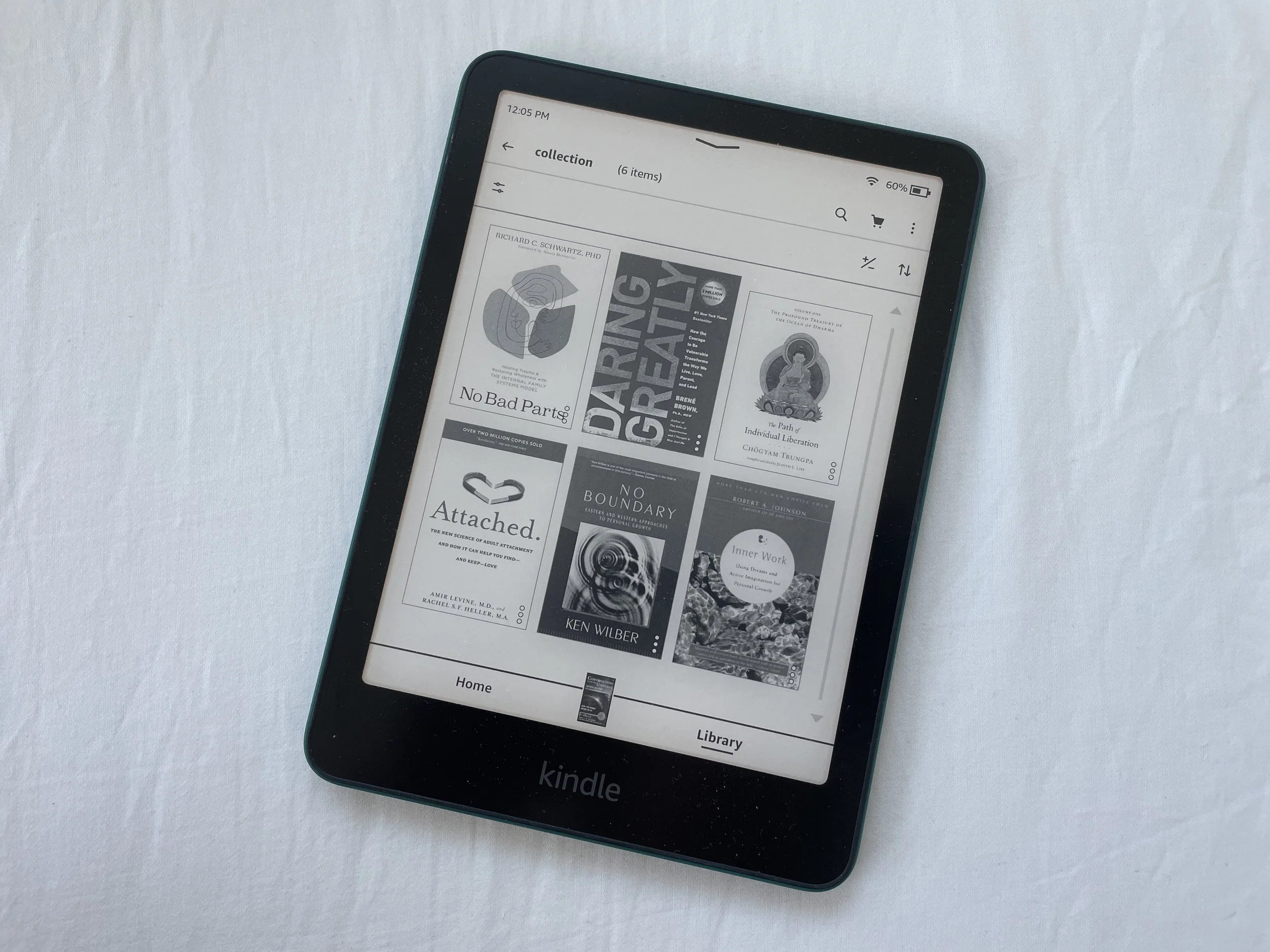
Maybe you can relate to this: you spend hours watching Joe Rogan or Jordan Peterson, or reading philosophers like Ken Wilber to try to understand consciousness and spiritual awakening. Or perhaps you’ve read book after book about relationships and health, without taking any action.
Did these help expand my awareness? Sure. Did they help point me towards some paths that eventually led to transformation? Sure. Did they, in and of themselves, lead to key transformation in areas like relationships, presence, work, health, mental health, and my nervous system regulation? No.
And that’s really the key thing to become aware of. It’s fine to have an intellectual curiosity. It enriches our lives. But what we don’t realize is that hours and hours spent on it don’t, on their own, lead to real transformation.
As one of my coaches once told me, in the context of seeking transformation: “Delete the need to understand.”
We can transform without understanding our problem to its full extent. But understanding our problem to its full extent doesn’t necessarily lead to transformation.
In this article, I cover my journey in more detail, and end with what actually helped me transform.
My early curiosities with philosophy
I remember the first lesson of my first-ever philosophy class in high school. I remember thinking: this is it. It felt like something lit up in me. This is what I want to spend my time doing, and what I want to major in in college. I had never quite felt that way about anything else I was doing in school.
Although I enjoyed theater and acting, my intellectual curiosity drew me harder to philosophy. Although I was good at math when I was younger, I knew it wasn’t what I wanted to spend my life doing. Although I loved hanging out with my friends, I was seeking people I could have deeper philosophical conversations with.
This range of interests brought me to the Gallatin School of Individualized Study at New York University, where I got to design my own major. Over the course of four years, my thirst for philosophy got me interested in thinkers like Immanuel Kant and in Kurt Gödel’s work, eventually leading me to do my senior colloquium on the formalization of knowledge. I was fascinated by how different systems of knowledge, like language, math, and science, define their assumptions and create their theories, as well as by their limitations.
As much as this scratched my itch for understanding knowledge in more depth, I still felt disillusioned.
I would sit in my room for hours, listening to Belle and Sebastian and Beatles records. I would walk from my apartment on St. Marks Place to campus in Greenwich Village, listening to Bill Evans’s jazz album Sunday at the Village Vanguard. I felt like there was still more truth that I hadn’t yet discovered. It wasn’t until more than a decade later, when I had my spiritual awakening, and in the years after that, that I found what I’d set out to find all those years ago.
All that reading and education enriched my life and grew my intellect. However, I still felt like I didn’t really know myself very well.
My 20s in professional growth & self-development
I got out of college not having a clue what I was gonna do. I decided to follow my curiosities, and they led me to technology. It was 2007, and Wi-Fi was taking off in the workplace. I decided to get a job in the technology industry.
Coming from a non-engineering background, I felt like I was way behind my colleagues. One of them said to me, “You’re in the wrong industry.” I felt discouraged.
I had to work day and night to catch up with my peers. I read engineering books, took courses, and got real-world experience doing customer projects. With every passing year, my confidence grew.
As I progressed in my career, I became increasingly aware of all the areas where I needed to grow to succeed, beyond subject matter expertise. Speaking with leaders and customers, I felt less than them, and sometimes felt embarrassed and uncomfortable in conversations.
I awoke to the ways in which I needed to sharpen my skills. I realized I needed to grow my listening, speaking, presentation, interviewing, and hiring skills, among others. There was so much to learn, and it felt daunting. I turned to books to grow my skills in these areas.
I felt like I was learning some very useful life skills. I felt angry that no one had taught me these practical skills before, despite four years of college. But no matter: I was learning them now.
I felt like I was understanding the ways to succeed in this world. But by my mid to late 20s, I got burnt out on all the traveling I was doing for work. I remember sitting in a hotel room, staring out of a window. Partying and tourism weren’t filling the void in me. I felt lonely, exhausted, and dissatisfied with my life.
I increasingly reawakened to parts of me that I had forgotten. I was still seeking more answers, though I couldn’t have told you what exactly I was seeking if you had asked me.
Through failed friendships and relationships, excessive drinking, and not feeling like I really knew myself very well, I knew there were more answers I was seeking.
My search to understand health
My health increasingly deteriorated through my 20s and early 30s. I had gained weight, felt low on energy, and felt sick often. I sought to understand how to gain vibrant health.
I read books on health, scoured the internet for information, took courses, and watched YouTube videos. I read the findings of the Blue Zones project on longevity. With all of this, I felt like I was learning a lot, and I started implementing changes to my diet. I felt like things were improving. But I still felt unhealthy and discouraged. I felt very far from the vibrant health I was seeking.
My search for truth and awakening
In 2018, I decided I’d had enough of all these feelings of dissatisfaction with my life, and I set out on a journey of transformation. That journey began with reading more books.
In the months before and the years after, I read books by sages, books on Buddhism, and books by philosophers like Ken Wilber. I learned about Buddhist concepts like emptiness. I learned about why we are dissatisfied with life. I felt like I could identify with something wise and true.
Through Ken Wilber, I learned about the spectrum of consciousness and the reasons we feel disconnected from ourselves: the persona and shadow divide, the ego and body divide, and the self and environment divide.
I also learned from Ken Wilber how various therapeutic modalities address these different divides. Here is a diagram I particularly liked from his book No Boundary, where he classifies a large spectrum of healing modalities by the specific divides in consciousness that they address.
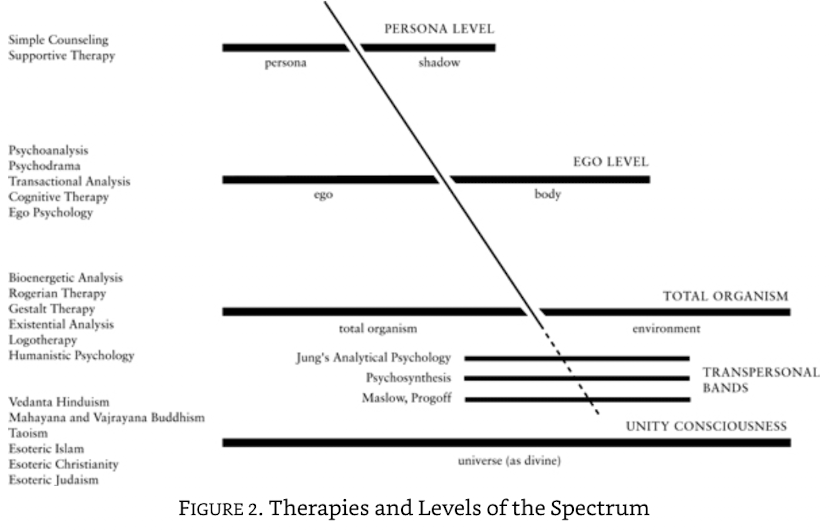
Figure 2, "Therapies and Levels of the Spectrum," from Ken Wilber's No Boundary (1979).
Armed with all this new knowledge, I felt like I had gained valuable wisdom. I felt like I had learned truths.
But the truth was that this was all just knowledge. I had been reading about spiritual awakenings, and the insights gained from them, but hadn’t actually experienced one myself.
It wasn’t until I actually sat down every day and meditated, and had my own spiritual awakening, that the teachings I’d read about became embodied wisdom. They became truths that I intuitively knew and that resonated with me. Before, they were just concepts I had learned.
This was one of the most important things I had to learn on my journey: the difference between knowledge and wisdom. Knowledge doesn’t become embodied wisdom until you have done the work and actually gone through transformation. Knowledge, although exciting and interesting, does not directly result in transformation.
My search to understand the shadow and psychology
Similarly, it was useful to know why different therapeutic modalities addressed different problems of healing. But just knowing that did not help me heal.
I read books on Carl Jung’s work in psychology, in particular the shadow, the collective unconscious, archetypes, and dream work, along with works in psychology by other authors.
On their own, they gave me some solace, a new, deeper understanding of why some of my problems were the way they were. I felt like I was gaining some real insight into my psyche.
But it wasn’t until I actually faced my shadow, allowed it to get messy, and allowed myself to feel deeply repressed emotions, that true transformation happened.
It wasn’t until I worked on somatics and embodiment that I awoke to some of my deepest shadow elements. These had been stored, trapped in my body. And through an unfolding of these, I found peace.
I learned that, although it fuels our ego to read books on psychology, to analyze our friends and family, and to feel validated in being right about what we say and do, it’s when we face our shadow and our feelings in their totality, doing the work every day, that we arrive at ourselves.
I learned that there is a cost, a price of admission, to this place of peace. And it cannot be bought with money. You have to do the work; you have to walk the path. In Joseph Campbell’s terms, you have to live the hero’s journey.
My search for better relationships
In my search to understand how to be better in relationships, and how to form a deeper connection with my partner, I read books on attachment theory, love languages, masculinity, and vulnerability.
But alone, this didn’t create the transformations I expected. I would freeze when the moment came to be vulnerable with friends, family, or partners. I’d avoid the topic, or skim over it. Or try to talk about some facts, or try to teach. Afterward, I’d feel horrible. I’d feel like I didn’t show up fully with my truth, and missed an opportunity for deeper connection. And often the opportunities didn’t come back naturally. The moment was gone.
Once again, I learned that having an intellectual understanding of vulnerability didn’t translate to embodying this in my daily life. I had to actually be vulnerable with my partner to create real intimacy. And with my friends and family. And this is not as easy as reading about it. It has taken me years to allow myself to be more vulnerable with people, and it’s something I’m always working on doing more of.
How to tell if you’re intellectualizing things
So how do we notice if we’re falling into this trap of intellectualizing our problems but not actually transforming?
A common sign is that we repeatedly tell people about patterns we notice in ourselves, but they keep running us anyway. It feels like we understand our problems clearly but can’t seem to change them.
Another is finding ourselves reading book after book about something, without actually seeing change happen. It could be a sign that we are using the acquiring of knowledge as a way to avoid facing our issues head-on.
Yet another is a habit we know intellectually is harming our health, yet we’re unable to change it.
What I learned about why intellectual understanding alone doesn’t lead to transformation
The reason all the reading of books, watching YouTube videos, and reading articles on the internet didn’t create the transformations I was seeking is that it stayed as knowledge. And knowledge is not the same as embodied wisdom.
Through my journey, I learned that I had to be willing to do the work, to integrate new ways of being. I had to loosen my grip on my identity and look at my life with a more independent awareness. I had to really allow myself to feel my deepest repressed feelings and insecurities. I had to stop living in my mind and start living in my body.
I also had to let go of using knowledge as a quiet power play, of being the one who knew the most in the room. All that knowing never helped me notice when my partner was in pain.
So much of what we are taught is about how to be a better version of ourselves by portraying a better image. To gain an intellectual understanding of what makes people successful, and start acting that way. To appear more confident. To perform better.
But I learned that this can have a dire consequence: instead of helping us arrive at our true selves, it makes our masks more sophisticated. It hardens our egos further. It makes us better at performing a version of ourselves. When we learn to discern using feeling instead of our minds, we can feel this difference clearly.
It is in the doing, the feeling, the vulnerability, the embodiment. It is in the choices we make, the habits we build, the people we choose, the awareness we build, that true transformation happens.
This is why I created the Presence Diagnostic: 90 minutes of feedback on what you can't see from the inside. So we can notice the patterns running us and begin to transform them.
In the next part, I tell the story of my health journey: my search for the health modality that would heal me and give me vibrant health, and what I learned along the way.